
Our Team
Leadership
-

Michael Greenstone
Co-Chair, Emissions Market Accelerator; Milton Friedman Distinguished Service Professor in Economics; Founding Faculty Director, Institute for Climate and Sustainable Growth; Director, EPIC -
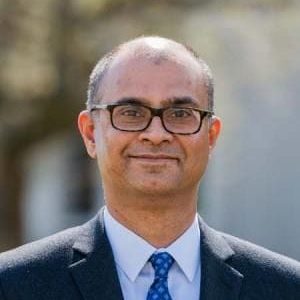
Bala Srinivasan
Co-Chair, Emissions Market Accelerator; Senior Advisor, Institute for Climate and Sustainable Growth


Michael Greenstone is the Milton Friedman Distinguished Service Professor in Economics at the University of Chicago. In addition, he serves as the founding director of the University’s Institute for Climate and Sustainable Growth and the director of the interdisciplinary Energy Policy Institute at the University of Chicago. He was previously the director of the Becker Friedman Institute for Economics.
During the Obama Administration, he served as the Chief Economist for the President’s Council of Economic Advisers, where he proposed and then co-led the development of the United States Government’s social cost of carbon. He is an elected member of both the National Academy of Sciences and the American Academy of Arts and Sciences, a fellow of the Econometric Society, a Carnegie Fellow (aka the “Brainy Award”), and a former editor of the Journal of Political Economy. Formerly, Greenstone was the 3M Professor of Environmental Economics at MIT and directed The Hamilton Project.
Greenstone’s research, which has influenced policy in the United States and globally, is focused on the global energy challenge that requires all societies to balance the needs for inexpensive and reliable energy, protection of the public’s health from air pollution, and minimizing the damages from climate change. Recently, his research has helped lead to the United States Government quadrupling its estimate of the damages from climate change, the adoption of pollution markets in India, and the use of machine learning techniques to target environmental inspections. As a co-director of the Climate Impact Lab, he is producing empirically grounded estimates of the local and global impacts of climate change. He created the Air QualityLife Index® that converts air pollution concentrations into their impact on life expectancy and co-founded Climate Vault, a 501(c)(3) that uses markets to allow institutions and people to reduce their carbon footprint and foster innovation in carbon dioxide removal.
Greenstone received a Ph.D. in Economics from Princeton University and a B.A. in Economics with High Honors from Swarthmore College.
Balaji Srinivasan was previously the Deputy Provost; Executive Vice President for Science, Innovation, and Strategy; and Chief International Officer at the University of Chicago. In addition, he oversaw University efforts in growing programs and presence with non-traditional students, advanced leadership development programs across various levels of University administration, and worked with the Booth School of Business to provide oversight of entrepreneurship and innovation activities at the Polsky Center.
Scientific Advisory Council
-
Michael Greenstone
Co-Chair, Emissions Market Accelerator; Milton Friedman Distinguished Service Professor in Economics; Founding Faculty Director, Institute for Climate and Sustainable Growth; Director, EPIC -
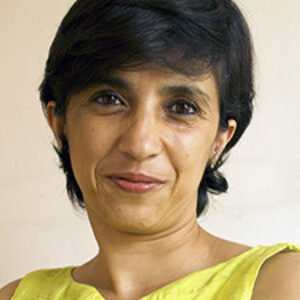
Rohini Pande
Henry J. Heinz II Professor of Economics; Director, Economic Growth Center, Yale University -

Nicholas Ryan
Associate Professor of Economics, Yale University -
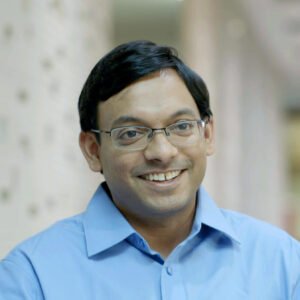
Anant Sudarshan
Associate Professor, Department of Economics at the University of Warwick


Michael Greenstone is the Milton Friedman Distinguished Service Professor in Economics at the University of Chicago. In addition, he serves as the founding director of the University’s Institute for Climate and Sustainable Growth and the director of the interdisciplinary Energy Policy Institute at the University of Chicago. He was previously the director of the Becker Friedman Institute for Economics.
During the Obama Administration, he served as the Chief Economist for the President’s Council of Economic Advisers, where he proposed and then co-led the development of the United States Government’s social cost of carbon. He is an elected member of both the National Academy of Sciences and the American Academy of Arts and Sciences, a fellow of the Econometric Society, a Carnegie Fellow (aka the “Brainy Award”), and a former editor of the Journal of Political Economy. Formerly, Greenstone was the 3M Professor of Environmental Economics at MIT and directed The Hamilton Project.
Greenstone’s research, which has influenced policy in the United States and globally, is focused on the global energy challenge that requires all societies to balance the needs for inexpensive and reliable energy, protection of the public’s health from air pollution, and minimizing the damages from climate change. Recently, his research has helped lead to the United States Government quadrupling its estimate of the damages from climate change, the adoption of pollution markets in India, and the use of machine learning techniques to target environmental inspections. As a co-director of the Climate Impact Lab, he is producing empirically grounded estimates of the local and global impacts of climate change. He created the Air QualityLife Index® that converts air pollution concentrations into their impact on life expectancy and co-founded Climate Vault, a 501(c)(3) that uses markets to allow institutions and people to reduce their carbon footprint and foster innovation in carbon dioxide removal.
Greenstone received a Ph.D. in Economics from Princeton University and a B.A. in Economics with High Honors from Swarthmore College.
Rohini Pande is the Henry J. Heinz II Professor of Economics and Director of the Economic Growth Center, Yale University. She is a co-editor of American Economic Review: Insights.
Pande’s research is largely focused on how formal and informal institutions shape power relationships and patterns of economic and political advantage in society, particularly in developing countries. She is interested the role of public policy in providing the poor and disadvantaged political and economic power, and how notions of economic justice and human rights can help justify and enable such change.
Her most recent work focuses on testing innovative ways to make the state more accountable to its citizens, such as strengthening women’s economic and political opportunities, ensuring that environmental regulations reduce harmful emissions, and providing citizens effective means to voice their demand for state services.
In 2018, Pande received the Carolyn Bell Shaw Award from the American Economic Association for promoting the success of women in the economics profession. She is the co-chair of the Political Economy and Government Group at Jameel Poverty Action Lab (J-PAL), a Board member of Bureau of Research on Economic Development (BREAD) and a former co-editor of The Review of Economics and Statistics. Before coming to Yale, Pande was the Rafik Harriri Professor of International Political Economy at Harvard Kennedy School, where she co-founded Evidence for Policy Design.
Pande received a PhD in economics from London School of Economics, a BA/MA in Philosophy, Politics and Economics from Oxford University and a BA in Economics from Delhi University.
Nicholas Ryan studies energy markets and environmental regulation in developing countries. Energy use enables high standards of living but rapid, energy-intensive growth has caused many environmental problems in turn. Nick’s research measures how energy use and pollution emissions respond to regulation and market incentives. His work includes empirical studies of the effect of power grid capacity on electricity prices, how firms make decisions about energy-efficiency and how environmental regulation can be designed to best abate pollution at low social cost.
Nick is joining Yale University as a Cowles Foundation Fellow for 2014-15 and an Associate Professor of Economics from 2015 onwards. He has been a Prize Fellow in Economics at Harvard University from 2012-2014. He received a PhD in Economics from the Massachusetts Institute of Technology in 2012 and a BA in Economics summa cum laude from the University of Pennsylvania. He previously worked as a Research Associate in the Capital Markets group at the Federal Reserve Board of Governors in Washington, DC.
Associate Professor at the Department of Economics at the University of Warwick, Senior Fellow at the Energy Policy Institute at the University of Chicago (EPIC). Prior to joining the University of Warwick, he held the position of South-Asia Director at EPIC and taught at the Harris School of Public Policy at the University of Chicago.
He received his PhD in Management Science and Engineering from Stanford University and holds undergraduate and master’s degrees in Mechanical Engineering from the Indian Institute of Technology (Delhi) and Stanford University, respectively. His research encompasses several aspects of energy and environment policy, including the design of environmental regulation, air-pollution reduction, climate change, energy efficiency, electricity access, and renewable energy policy. Anant works at the intersection of environmental economics and engineering, with on-going research on a variety of areas including environmental regulation, air-pollution, climate change, energy efficiency, electricity and renewable energy. His present work includes collaboration with India’s Ministry for Environment and Forests to design and evaluate a pilot emissions trading program to regulate industrial air pollution. He is also working with the Government of Bihar on electricity distribution reforms designed to reduce losses and enhance the supply of power.
Staff
-

Dhriti Agarwal
Research Associate, EPIC India -
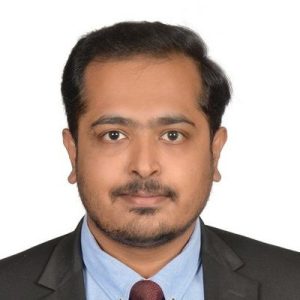
Dheeraj Alshetty
Senior Research Manager, EPIC India -

Prakriti Bhardwaj
Research Manager, J-PAL South Asia -

Kaushik Deb
Executive Director, Emissions Market Accelerator; Executive Director, EPIC India -

Yash Dumaswala
Senior Project Associate, J-PAL South Asia -

Claudia Gemmel
Communications Specialist, Global Initiatives; Institute for Climate and Sustainable Growth -

Krishnendu Jayakrishan
Research Associate, J-PAL South Asia -

Akshay Kannan
Research Manager, J-PAL South Asia -

Andrew Light
Distinguished Fellow, Institute for Climate and Sustainable Growth; Former Assistant Secretary of Energy for International Affairs, U.S. Department of Energy -

Gargi Pal
Senior Research Manager, J-PAL South Asia -

Ashirbad S Raha
South Asia Regional Director- Communications, EPIC India -
Gaurav Saraf
Program Manager, Emissions Market Accelerator -

Maithili Sharma
Research Associate, J-PAL South Asia -

Shivam Singh
Research Associate, J-PAL South Asia -

Shruthi Srinivasan
Manager, Policy and Research, EPIC India -
Kavita Vij
Director, Programmatic Advancement, EPIC India


Dhriti Agarwal is a Research Associate with the Emissions Trading Scheme (ETS) program at the Energy Policy Institute at the University of Chicago (EPIC India).
She contributes to the design and implementation of market-based solutions to address industrial pollution and climate challenges. Dhriti holds a Bachelor’s degree in Economics (Honours) and is a Young Leaders for Active Citizenship (YLAC) fellow.
Dr. Dheeraj Alshetty is the Senior Research Manager for the Emissions Trading Scheme (ETS) program at the Energy Policy Institute at the University of Chicago (EPIC India). In this role, he collaborates with stakeholders and Principal Investigators to implement ETS initiatives across various states.
Dheeraj has a strong foundation in scientific research and professional experience in air pollution domain. In his previous role as an Advisor Air Quality Scientist at the Environmental Defense Fund (EDF), he worked closely with city government officials, technical partners, and stakeholders to deliver high-quality research in a timely manner. Dheeraj has contributed to numerous state-level and national consultancy projects focused on addressing air pollution in major cities of India like Delhi, Mumbai, Chennai etc.
Dheeraj holds a PhD in Civil Engineering with a focus on air quality management from the Indian Institute of Technology Madras (IITM) and has over eight years of experience in the field. Dheeraj holds a bachelor’s degree in civil engineering, and he started his professional career by joining L&T constructions Pvt Ltd as a senior engineer immediately after graduation.
Prakriti is working as a Research Manager on the Emission Trading Scheme project (ETS) that aims to design, evaluate and scale-up market-based environmental regulation for particulate matter in Gujarat. Previously, she interned with NITI Aayog on projects in public health. She holds a BA (Honors) in economics from University of Delhi and a Masters in Environmental Economics from Australian National University.
Kaushik Deb leads the Energy Policy Institute at the University of Chicago’s India team (EPIC India) as the Executive Director. As an applied economist with over 25 years of experience, he has a distinguished career as a strategic advisor to governments and corporates on policy, markets, equity, access, and technology developments. Prior to joining EPIC India, he directed the India Program at Columbia University’s Center on Global Energy Policy. His previous roles include serving as Program Director at the King Abdullah Petroleum Studies and Research Center, where he managed research on global oil, natural gas, hydrogen, and petrochemicals markets. Additionally, he has led research on low carbon fuels and climate issues in Group Economics in bp plc., the Policy Group in IDFC and at TERI. He also established sustainability-focused management leadership programs at TERI University (now TERI SAS). He holds a D.Sc. from ETH Zürich and a master’s degree in economics from the Delhi School of Economics.
Yash Dumaswala is responsible for project design and it’s implementation on the ground. He takes care of the surveys, maintains the project protocols, assists in team-building, and manage stakeholders. Prior to this, he has worked as a Surveyor, Field Monitor & Field Manager to conduct and manage data collection surveys for further analysis, reporting, and fulfilled project requirements.
Yash holds a Bachelor’s degree in Mechanical Engineering from C. K. Pithawalla College of Engineering & Technology, Surat. He is a tech enthusiast, and aims to take the project on a greater level by ensuring the impact on the ground.
Claudia Gemmel is a Communications Specialist at the Institute for Climate and Sustainable Growth at the University of Chicago. Fluent in five languages (German, English, French, Czech, and Spanish), Claudia is seasoned in political communication, advocacy, and translation. Before joining the Institute, she held various roles at the Organisation for Economic Co-operation and Development (OECD) in Paris. Passionate about building bridges and a strategic thinker, she managed communication, outreach, and media strategies on topics encompassing development affairs, global relations, financial and business matters, as well as public affairs. Claudia holds a BA (Hons) in Political and Social Sciences from the University of Wales (UK), an MSc in European Union Politics and Law from the University of Edinburgh (Scotland), and a Master’s in Communication from the Paris Institute of Political Studies, SciencesPo (France). Having studied and worked across Europe, Claudia brings a nuanced cultural awareness that transcends national borders.
Krishnendu Jayakrishnan is a Research Associate at J-PAL South Asia, where she works on the Effluent Trading project in Gujarat, one of the world’s first market-based mechanisms for industrial water pollution regulation. At J-PAL, she oversees implementation of the evaluation, manages field teams, and contributes to research design, data analysis, and policy engagement to advance scalable solutions in environmental regulation.
Previously, she conducted research at IISER Bhopal in environmental and development economics, including the impacts of the El Niño Southern Oscillation on Indian agriculture and farmers’ welfare. She also evaluated social protection programs such as cash transfer schemes and education subsidies, with a focus on women’s socioeconomic welfare in India. She previously interned with J-PAL’s Data Capacity Accelerator Network (CAN), developing spatial econometric models to estimate the costs of urban flooding in Bengaluru.
Krishnendu holds an integrated master’s degree in economics with a minor in data science and engineering from the Indian Institute of Science Education and Research (IISER) Bhopal.
Akshay Kannan is a Research Manager with J-PAL South Asia where he is part of the Emission Trading Scheme (ETS) Project, a collaborative project between the Gujarat Pollution Control Board, EPIC-India and J-PAL South Asia at IFMR, to implement and evaluate a pilot ETS for the particulate matter from industrial emissions. Before his Masters, he worked as a Test Engineer in the Air-Cargo industry where he ensured the quality check of the product delivered. During his Masters, Akshay had associated with the policy team of Mahindra Group of Industries to conduct an independent study on the farm mechanization subsidy disbursement challenges in 2019. Prior to joining J-PAL, Akshay was working as a Research Fellow & Academic Tutor with Jindal School of Government & Public Policy where he was part of a research on Multidimensional Poverty. Akshay holds a Bachelor’s in Mechanical Engineering from Kerala University and a Master’s in Public Policy from Jindal School of Government & Public Policy at O.P. Jindal Global University.
Andrew Light served as Assistant Secretary of Energy for International Affairs at the U.S. Department of Energy from 2021 to 2025. At the Department of Energy, Light helped to accelerate and expand some three-dozen bilateral clean energy and energy security dialogues, forums, councils, and partnerships with countries from all regions of the world. He was also lead U.S. negotiator and Ministerial Sherpa for successful energy tracks of the G7, G20, Asia-Pacific Economic Cooperation platform, and served as Vice Chair of the Governing Board of the International Energy Agency.
Previously, Light served as Senior Adviser and India Counselor to the U.S. Special Envoy on Climate Change, and as a Staff Climate Adviser in Secretary of State John Kerry’s Office of Policy Planning in the U.S. Department of State. In this capacity, he was Co-Chair of the U.S.-India Joint Working Group on Combating Climate Change, Chair of the Climate Working Group on the Sustainable Development Goals, and served on the senior strategy team for the UN climate negotiations that led to the creation of the Paris Agreement.
“The University of Chicago is a world leader in bringing data-driven analysis to create practical solutions to urgent policy problems, climate change, and the necessary clean energy transition, being chief among them. I’m thrilled to join the Institute team and work to design instruments that advance global cooperation on these critical issues.”
Gargi Pal is a Senior Research Manager at J-PAL South Asia. She has worked on the Energy & Environment portfolio of projects, including the Information Disclosure project in Maharashtra, the Emissions Trading Scheme in Gujarat and the Smart Plugs project in Haryana. In her time at J-PAL, Gargi has collaborated with the State Pollution Control Boards of Maharashtra, Gujarat, and Punjab as well as the Central Pollution Control Board to work on evaluations aimed at reducing air pollution. Further, she is also involved with the Haryana Immunization Project, aimed at boosting immunization demand.
Prior to this, Gargi worked with KPMG for three years, where she delivered on multi-sectoral secondary research, informing market entry and business strategy of clients. Gargi holds a master’s degree from TERI University and a bachelor’s degree from Maitreyi College (Delhi University), both in economics.
As the Regional Director of Communications, Ashirbad is the organization’s senior communications leader, managing a comprehensive strategy to strengthen EPIC India’s reputation in India and the region. With more than 17 years of experience in strategic communication on issues related to energy and environment, climate change, and humanitarian response, he leads a team of communication specialists and consultants with expertise in digital communications, web, and social media, video production, and internal communications.
Under his leadership, EPIC India initiated its video storytelling initiatives by launching a YouTube channel and producing films that got an international audience at the Conference of the Parties to the UNFCCC (COP27) in Egypt and COP28 in Dubai. He and his team also anchored the launch of institutional social media channels including LinkedIn and Instagram and engineered the publishing of a multimedia monthly e-newsletter. Ashirbad was also instrumental in the brand building of AQLI – an environmental data research tool of the University of Chicago – in India and the region. Strategic outreach has ensured that over the years, AQLI findings have been mentioned in books, films, TV shows, Newspapers, and even the Indian Parliament.
A former journalist with The Times of India, Ashirbad puts storytelling at the center of his work and is committed to using experimental and impactful communication techniques to execute outreach strategies that create systemic impact. He has a bachelor’s degree in journalism from Delhi University and a postgraduate diploma in journalism from the Times Centre for Media Studies. When not working, Ashirbad tries to centralize his energy in practicing slow living.
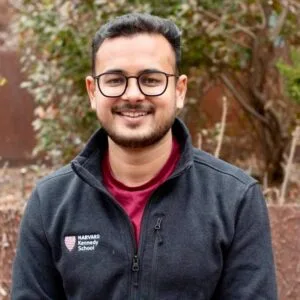
Gaurav Saraf is a Program Manager for the Emissions Trading Scheme at the Institute of Climate and Sustainable Growth. He holds a Master’s in Public Administration in International Development (MPA/ID) from the Harvard Kennedy School.
He previously worked as a Consultant at the World Bank’s Bureaucracy Lab, an initiative jointly led by the Development Impact Group (DIME) and the Governance Global Practice (GGP), focused on promoting evidence-based policymaking and leveraging technology for public administration reform.
Prior to his master’s, Gaurav spent five years at the Abdul Latif Jameel Poverty Action Lab (J-PAL), where he led three large-scale randomized control trials (RCTs) in labor markets and agriculture, working closely with policymakers and stakeholders to drive data-driven development solutions.
Maithili Sharma is a Research Associate at J-PAL South Asia, where she contributes to the Emissions Trading Scheme (ETS) project in Surat. This initiative, in collaboration with the Gujarat Pollution Control Board and EPIC-India, is pioneering a market-based trading system for particulate matter emissions, aiming to create a scalable model for sustainable environmental regulation across Gujarat and beyond.
Before joining J-PAL, Maithili worked as a Management Consultant at Kepler Cannon, where she led process optimization and digital transformation projects across diverse sectors, including financial services, healthcare, and SaaS. Her experience spans strategy development, operational efficiency, and technology-driven interventions. She has also gained research experience through internships at NITI Aayog, TERI, and ICRIER, where she worked on policy analysis, and economic research.
Maithili holds a Bachelor’s degree in Economics from Shri Ram College of Commerce, University of Delhi.
Shivam Singh is a Research Associate at J-PAL South Asia, where he is part of the Emissions Trading Scheme (ETS) Scale-Up Project in Ahmedabad. This project, a collaboration with the Gujarat Pollution Control Board and EPIC-India, aims to design, implement, and evaluate a market-based trading system for particulate matter emissions to promote sustainable environmental regulation across Gujarat.
Before joining J-PAL, Shivam gained valuable experience as a Management Consultant at Accenture, where he led initiatives to improve operational efficiency and ensure quality assurance across sectors, including telecommunications, insurance, and life sciences. Shivam also worked part-time as a Research Analyst on the Scientific Labs Management Project. This project aimed to optimize lab productivity and workforce training by examining the organizational practices within research labs, which are supported by substantial federal funding.
Shivam holds a Master’s in Economics from the University of St Andrews and a Bachelor’s degree in Economics from Hindu College, University of Delhi.
Shruthi manages a mixed portfolio of research, policy, and strategic projects for EPIC India. She brings in a rich experience of working closely with Members of Parliament and government stakeholders. Prior to joining EPIC, Shruthi was a Senior Policy Associate at J-PAL South Asia where she supported evidence generation, synthesis and dissemination for the Social Protection and Governance sectors. Further, she also provided strategic support to deepen J-PAL SA’s institutional partnership with the Government of Odisha. She has also worked with the Policy vertical of Swaniti Global, where she supported policy engagements with Members of Parliament. Formerly, Shruthi was also a LAMP Fellow in the 2020-2021 cohort.
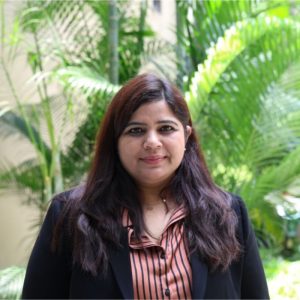
Kavita Vij is the Director for Programmatic Advancement at the Energy Policy Institute, University of Chicago (India). In her role, she spearheads fundraising, strategic partnerships, and leads efforts to build cross-sector collaborations that enable impact at scale across India’s energy and climate landscape. She is responsible for mainstreaming EPIC India’s work and finding representation platforms within industry associations, non-profit institutions, research organisations, academia, and the Government of India. Previously, she has worked with leading organisations such as the Council on Energy, Environment and Water (CEEW), Climate Policy Initiative (CPI), Prosus—a global consumer internet group operating across online classifieds, food delivery, payments, and fintech—and the Indian School of Business (ISB).
Certified as a Six Sigma Black Belt professional, Kavita holds a Bachelor’s degree in Arts from Delhi University, a postgraduate in Management from Symbiosis University and a General Management Program Certification specialising in Leadership and Strategy from the Indian School of Business.